
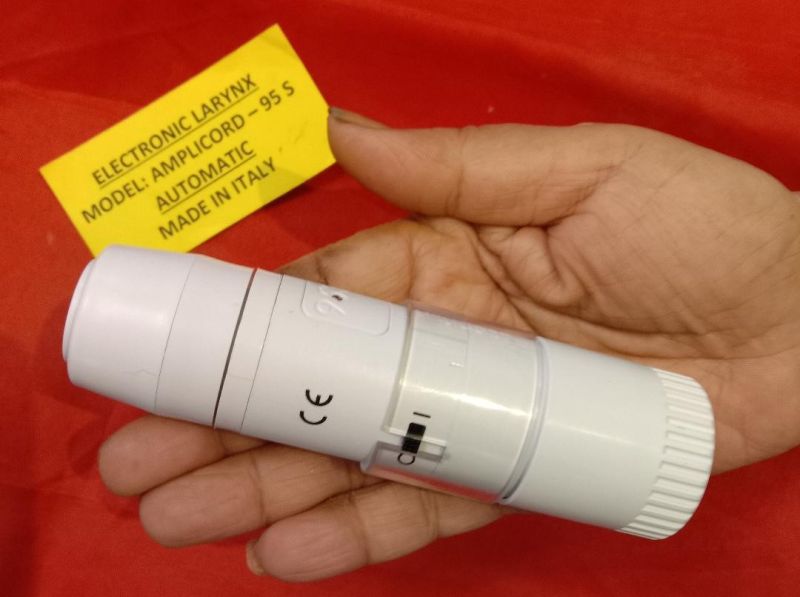
Electrolarynx Instrument in Hyderbad The electrolarynx is a medical device used to help individuals who have lost their natural voice due to laryngectomy, injury, or medical conditions affecting the vocal cords. It is an essential tool for people who have undergone the surgical removal of the larynx (voice box) and need an alternative method for communication. This device produces an artificial voice by generating vibrations that are transferred to the throat or oral cavity, enabling the user to articulate speech. The electrolarynx is one of the most widely used speech rehabilitation devices and plays a crucial role in restoring verbal communication, allowing users to interact with family, friends, and society. It provides a means for people with voice loss to regain their independence and express themselves clearly. History and Development The electrolarynx has evolved significantly since its inception. The first artificial larynx devices were developed in the early 20th century, but they were bulky and difficult to use. Over time, advancements in technology have made modern electrolarynx devices more compact, efficient, and user-friendly. In the 1950s, electronic speech devices gained popularity as an alternative to esophageal speech (a method where individuals learn to produce sound using their esophagus). The introduction of battery-powered electrolarynx devices revolutionized speech rehabilitation by offering a more accessible and less demanding solution for laryngectomy patients. Today, electrolarynx devices come with various features, including adjustable pitch and volume, rechargeable batteries, and even hands-free operation, making them more adaptable to individual user needs. How the Electrolarynx Works The electrolarynx is a small, handheld device that generates vibrations to replace the sound produced by the vocal cords. When the device is placed against the throat or inside the mouth, it transmits vibrations through the tissues, creating a mechanical sound that the user can shape into speech using their lips, tongue, and mouth movements. There are two primary types of electrolarynx devices: External (Neck-Type) Electrolarynx The most common type, it is placed against the neck or under the chin. Vibrations from the device are transmitted through the skin to the oral cavity. Users articulate words normally, shaping the sound into understandable speech. Intra-Oral Electrolarynx Uses a small tube inserted into the mouth to transmit vibrations. Suitable for users who have difficulty placing the device on their neck due to surgery scars or radiation effects. Offers an alternative for those who cannot use a neck-type electrolarynx effectively. Modern electrolarynx models include features such as volume control, tone adjustment, and speech enhancers to improve voice quality. Some advanced versions even integrate Bluetooth and smartphone connectivity for better usability. Benefits of Using an Electrolarynx The electrolarynx provides several advantages for individuals who have lost their natural voice: ✅ Immediate Voice Restoration – Unlike esophageal or tracheoesophageal speech, which require training, an electrolarynx allows users to speak almost immediately after learning the basics. ✅ Ease of Use – The device is simple to operate, making it accessible for people of all ages and skill levels. ✅ Adjustability – Users can modify pitch, volume, and vibration settings to personalize their voice output. ✅ Portable and Lightweight – Modern devices are small and easy to carry, allowing users to communicate wherever they go. ✅ Reliable Communication – Provides a clear and consistent voice, especially when other speech methods may not be effective. Challenges and Limitations While the electrolarynx is a valuable tool, it does have some limitations: 🔹 Robotic Sound – Speech produced by the electrolarynx often sounds mechanical and lacks natural vocal intonation. 🔹 Dependency on Battery Power – Users must ensure that their device is charged or has spare batteries. 🔹 Background Noise Sensitivity – In noisy environments, it may be difficult for others to hear and understand the artificial voice. 🔹 Learning Curve – While easier than other speech rehabilitation methods, it still requires practice to develop clear and intelligible speech. 🔹 Social Stigma – Some users may feel self-conscious about using an artificial voice in public. Despite these challenges, many users successfully adapt to the electrolarynx and use it confidently in daily life. Training and Speech Techniques Using an electrolarynx effectively requires practice and proper technique. Here are some key tips for improving speech clarity: ✔ Proper Placement – Position the device firmly against the neck or under the chin for the best sound transmission. ✔ Clear Articulation – Emphasize lip and tongue movements to form words clearly. ✔ Pacing Speech – Speak slowly and deliberately to enhance intelligibility. ✔ Using Intonation – Some advanced electrolarynx models allow users to adjust pitch during speech to create more natural-sounding speech patterns. ✔ Practice Regularly – Daily use and speech exercises can improve fluency and confidence. Speech therapy with a professional can also help users maximize their electrolarynx skills. Choosing the Right Electrolarynx When selecting an electrolarynx, consider the following factors: 🔹 Sound Quality – Look for devices that offer clear and understandable voice output. 🔹 Battery Life – Choose a model with long-lasting rechargeable batteries or replaceable battery options. 🔹 Size and Weight – Ensure the device is comfortable to hold and carry. 🔹 Durability – A sturdy, well-built device will last longer and withstand daily use. 🔹 Customization Options – Adjustable pitch, volume, and tone features allow for better personalization. Popular brands of electrolarynx devices include Servox, TruTone, and SolaTone, each offering unique features to meet different user preferences. Future of Electrolarynx Technology With advances in artificial intelligence and speech synthesis, the future of electrolarynx technology looks promising. Researchers are developing more natural-sounding voice generators, improved vibration mechanisms, and AI-assisted speech enhancers to make artificial speech more human-like. Some upcoming innovations include: 🔸 AI-Based Voice Modulation – Machines that adapt voice tone and expression dynamically. 🔸 Integration with Smart Devices – Bluetooth and app-controlled speech systems for hands-free communication. 🔸 Smaller and More Efficient Models – Compact, lightweight, and energy-efficient designs for better portability. 🔸 Bio-Integrated Speech Devices – Potential future developments in implantable or wearable electrolarynx alternatives. These advancements aim to improve the quality of life for individuals who rely on the electrolarynx, making communication even more seamless and natural.


This is your website preview.
Currently it only shows your basic business info. Start adding relevant business details such as description, images and products or services to gain your customers attention by using Boost 360 android app / iOS App / web portal.
Electrolarynx Instrument in Hyderbad The electro...
2025-02-20T04:20:19
Electrolarynx Instrument in Hyderbad The electrolarynx is a medical device used to help individuals who have lost their natural voice due to laryngectomy, injury, or medical conditions affecting the vocal cords. It is an essential tool for people who have undergone the surgical removal of the larynx (voice box) and need an alternative method for communication. This device produces an artificial voice by generating vibrations that are transferred to the throat or oral cavity, enabling the user to articulate speech. The electrolarynx is one of the most widely used speech rehabilitation devices and plays a crucial role in restoring verbal communication, allowing users to interact with family, friends, and society. It provides a means for people with voice loss to regain their independence and express themselves clearly. History and Development The electrolarynx has evolved significantly since its inception. The first artificial larynx devices were developed in the early 20th century, but they were bulky and difficult to use. Over time, advancements in technology have made modern electrolarynx devices more compact, efficient, and user-friendly. In the 1950s, electronic speech devices gained popularity as an alternative to esophageal speech (a method where individuals learn to produce sound using their esophagus). The introduction of battery-powered electrolarynx devices revolutionized speech rehabilitation by offering a more accessible and less demanding solution for laryngectomy patients. Today, electrolarynx devices come with various features, including adjustable pitch and volume, rechargeable batteries, and even hands-free operation, making them more adaptable to individual user needs. How the Electrolarynx Works The electrolarynx is a small, handheld device that generates vibrations to replace the sound produced by the vocal cords. When the device is placed against the throat or inside the mouth, it transmits vibrations through the tissues, creating a mechanical sound that the user can shape into speech using their lips, tongue, and mouth movements. There are two primary types of electrolarynx devices: External (Neck-Type) Electrolarynx The most common type, it is placed against the neck or under the chin. Vibrations from the device are transmitted through the skin to the oral cavity. Users articulate words normally, shaping the sound into understandable speech. Intra-Oral Electrolarynx Uses a small tube inserted into the mouth to transmit vibrations. Suitable for users who have difficulty placing the device on their neck due to surgery scars or radiation effects. Offers an alternative for those who cannot use a neck-type electrolarynx effectively. Modern electrolarynx models include features such as volume control, tone adjustment, and speech enhancers to improve voice quality. Some advanced versions even integrate Bluetooth and smartphone connectivity for better usability. Benefits of Using an Electrolarynx The electrolarynx provides several advantages for individuals who have lost their natural voice: ✅ Immediate Voice Restoration – Unlike esophageal or tracheoesophageal speech, which require training, an electrolarynx allows users to speak almost immediately after learning the basics. ✅ Ease of Use – The device is simple to operate, making it accessible for people of all ages and skill levels. ✅ Adjustability – Users can modify pitch, volume, and vibration settings to personalize their voice output. ✅ Portable and Lightweight – Modern devices are small and easy to carry, allowing users to communicate wherever they go. ✅ Reliable Communication – Provides a clear and consistent voice, especially when other speech methods may not be effective. Challenges and Limitations While the electrolarynx is a valuable tool, it does have some limitations: 🔹 Robotic Sound – Speech produced by the electrolarynx often sounds mechanical and lacks natural vocal intonation. 🔹 Dependency on Battery Power – Users must ensure that their device is charged or has spare batteries. 🔹 Background Noise Sensitivity – In noisy environments, it may be difficult for others to hear and understand the artificial voice. 🔹 Learning Curve – While easier than other speech rehabilitation methods, it still requires practice to develop clear and intelligible speech. 🔹 Social Stigma – Some users may feel self-conscious about using an artificial voice in public. Despite these challenges, many users successfully adapt to the electrolarynx and use it confidently in daily life. Training and Speech Techniques Using an electrolarynx effectively requires practice and proper technique. Here are some key tips for improving speech clarity: ✔ Proper Placement – Position the device firmly against the neck or under the chin for the best sound transmission. ✔ Clear Articulation – Emphasize lip and tongue movements to form words clearly. ✔ Pacing Speech – Speak slowly and deliberately to enhance intelligibility. ✔ Using Intonation – Some advanced electrolarynx models allow users to adjust pitch during speech to create more natural-sounding speech patterns. ✔ Practice Regularly – Daily use and speech exercises can improve fluency and confidence. Speech therapy with a professional can also help users maximize their electrolarynx skills. Choosing the Right Electrolarynx When selecting an electrolarynx, consider the following factors: 🔹 Sound Quality – Look for devices that offer clear and understandable voice output. 🔹 Battery Life – Choose a model with long-lasting rechargeable batteries or replaceable battery options. 🔹 Size and Weight – Ensure the device is comfortable to hold and carry. 🔹 Durability – A sturdy, well-built device will last longer and withstand daily use. 🔹 Customization Options – Adjustable pitch, volume, and tone features allow for better personalization. Popular brands of electrolarynx devices include Servox, TruTone, and SolaTone, each offering unique features to meet different user preferences. Future of Electrolarynx Technology With advances in artificial intelligence and speech synthesis, the future of electrolarynx technology looks promising. Researchers are developing more natural-sounding voice generators, improved vibration mechanisms, and AI-assisted speech enhancers to make artificial speech more human-like. Some upcoming innovations include: 🔸 AI-Based Voice Modulation – Machines that adapt voice tone and expression dynamically. 🔸 Integration with Smart Devices – Bluetooth and app-controlled speech systems for hands-free communication. 🔸 Smaller and More Efficient Models – Compact, lightweight, and energy-efficient designs for better portability. 🔸 Bio-Integrated Speech Devices – Potential future developments in implantable or wearable electrolarynx alternatives. These advancements aim to improve the quality of life for individuals who rely on the electrolarynx, making communication even more seamless and natural.
2025-02-20T04:20:19


Submit Your Enquiry